Picture this: It is 4:30 PM on a Tuesday. You just rushed home from work, dinner is half-planned, and now you have to bundle your eight-year-old into the car for a 15-minute drive to the local mosque or tutor’s house. By the time you get back, everyone is exhausted, homework is rushed, and bedtime feels like a battlefield.
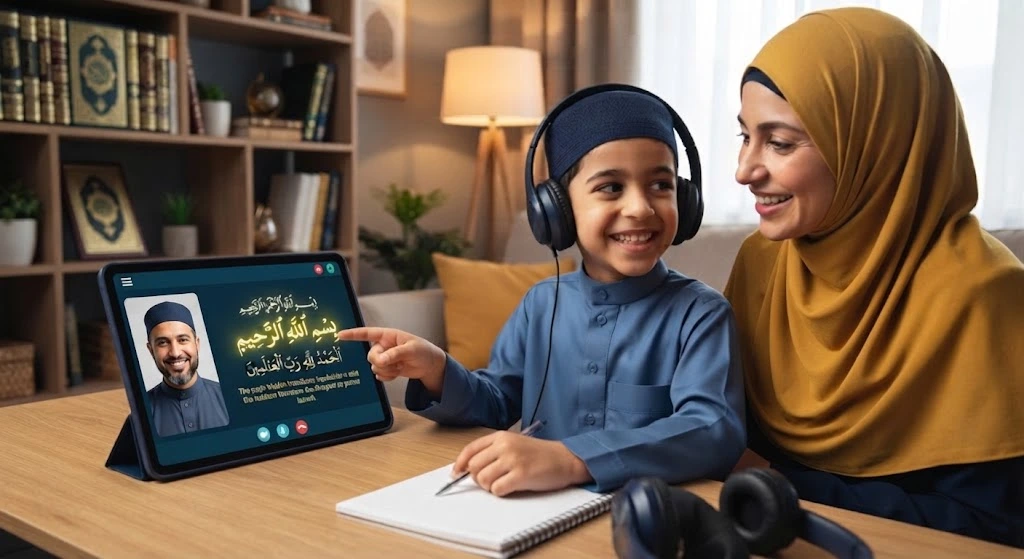
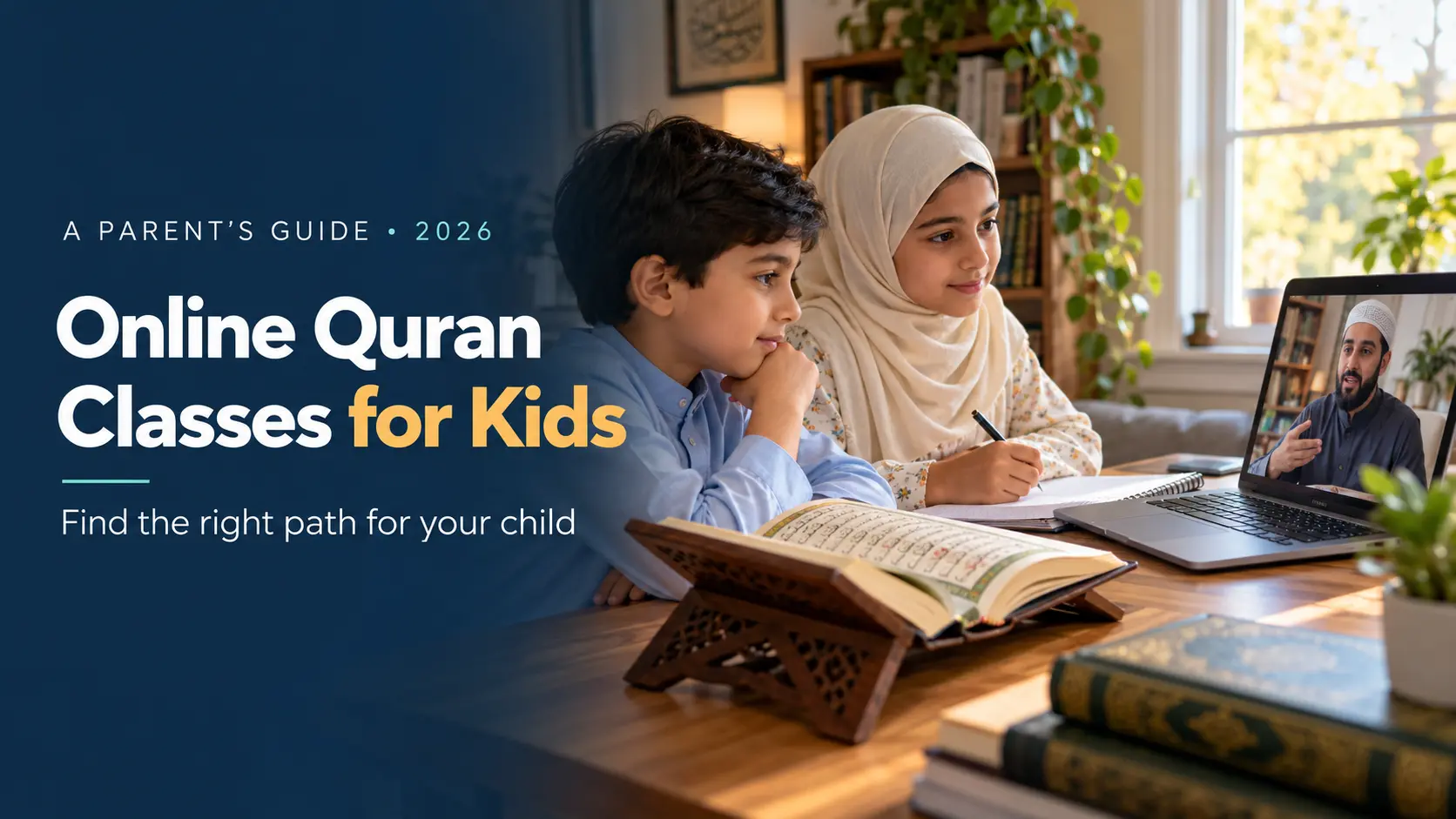
Now, imagine a different scenario. Your child finishes school, has a healthy snack, and calmly sits down at the family desk. Within two minutes, they are connected live with a certified, warm, and patient Quran tutor who greets them with a bright smile. No traffic stress, no rushed schedules, and you can watch their progress directly from your kitchen while sipping your coffee.
If you are a parent living in the USA, UK, Canada, Australia, or the Gulf, this shift is more than just a convenience—it is becoming the gold standard for religious education. Finding reliable online Quran classes for kids can transform a daily chore into a warm, engaging milestone your child actually loking forward to.
Here is the catch: not all virtual academies are created equal. Enrolling your child blindly without checking teacher qualifications, engagement styles, or digital safety protocols can lead to frustration, wasted money, and lost motivation.
In this comprehensive guide, we will break down everything you need to know to select the right platform, evaluate teaching methodologies, and set your young learner up for lifelong success.
Quick Summary: Key Takeaways
Flexibility Meets Focus: Virtual classes let busy families schedule lessons around school, sports, and time zones across North America, Europe, and the Middle East.
Certified Expertise: Modern platforms offer both male and female certified Qaris with specialized training in teaching young non-Arabic speakers.
Engagement First: Gamified Tajweed rules, digital rewards, and one-on-one attention keep kids motivated far longer than traditional rigid lectures.
Safety Assured: Top-tier academies feature monitored classrooms, secure video software, and complete parental transparency.
Why Modern Parents Are Switching to Virtual Quran Education
For generations, Quran learning for children meant traveling to a local center, sitting in crowded circles, and often struggling to get individual attention. While community centers still hold immense value, modern family dynamics demand more adaptability.
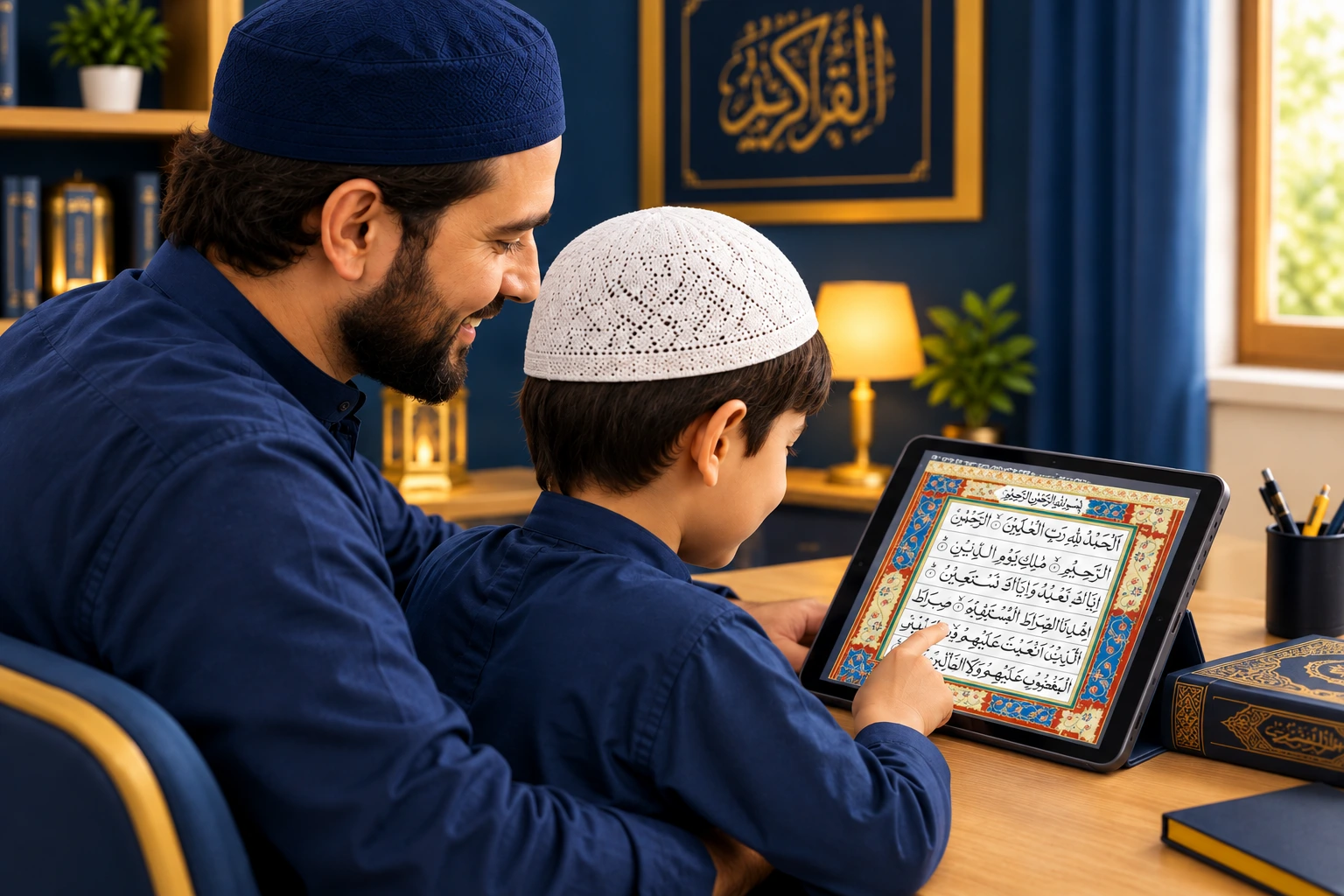
Think about it this way: modern kids are digital natives. They learn math on tablets, interact with educational apps daily, and thrive on visual reinforcement. When Quran education adopts these same engaging delivery methods, children absorb the lessons much faster.
Furthermore, finding qualified, certified native Arab or non-Arab teachers who speak fluent English and understand Western or Gulf cultural nuances used to be nearly impossible outside of specialized neighborhoods. Today, geographic borders have dissolved. Your child can learn from a master instructor in Cairo, London, or Islamabad while sitting comfortably in your living room in Houston, Toronto, London, or Dubai.
Pro Tip: Consistency matters far more than intense marathon sessions. Scheduling 30-minute interactive sessions four times a week builds muscle memory for Arabic articulation much faster than a single two-hour weekend block.
How to Evaluate Online Quran Classes for Kids: The 4-Tier Blueprint
To help you cut through the marketing noise of hundreds of online academies, we created a simple evaluation framework called The 4-Tier Student Success Filter.
[Tier 1: Tutor Vetting & Certification]
       ↓
[Tier 2: Curriculum & Age Adaptation]
       ↓
[Tier 3: Technology & Safety Infrastructure]
       ↓
[Tier 4: Trial Class & Progress Tracking]
Let’s examine each tier in detail so you know exactly what questions to ask before paying a single dollar.
Tier 1: Tutor Vetting, Certification, and Accent Clarity
The single most critical factor in your child’s Quranic journey is the teacher. A brilliant scholar who lacks patience will quickly turn a child away from learning.
Look for Ijaza and Formal Certification: Ensure the instructors hold formal certifications in Tajweed and Qira’at.
Child Psychology Training: Teaching an energetic six-year-old requires a completely different skill set than teaching an adult. Look for platforms that train their tutors in positive reinforcement and child engagement.
Language Proficiency: For children growing up in Western or English-dominant Gulf households, the tutor must be fully fluent in English to explain the mechanics of articulation points (Makharij) clearly.
Tier 2: Age-Appropriate Curriculum and Gamification
Children have shorter attention spans. Memorizing rules of Tajweed through dry textbook recitation rarely works for a nine-year-old.
Interactive Noorani Qaida: The foundation must be visual and engaging, connecting letters to sounds with colorful digital annotations.
Reward Systems: Look for platforms that incorporate digital stickers, milestone badges, or star charts.
Pace Adaptation: The best teachers adjust their speed based on the child’s daily energy levels, blending light revision with new learning.
Tier 3: Technology, Scheduling, and Safety Infrastructure
Your technical experience should be frictionless. If a class starts with ten minutes of audio troubleshooting, the child’s focus is already broken.
Reliable Software: Check whether they use standard web browsers or stable apps like Zoom or custom-built virtual classrooms with shared digital whiteboards.
Flexible Rescheduling: Life with kids is unpredictable. A good academy should offer easy make-up class policies.
Parental Monitoring: Ensure you have access to recorded sessions or live monitoring options so you can review how your child is interacting with the tutor.
Tier 4: Trial Class and Transparent Pricing
Never commit to a long-term monthly contract without testing the waters first.
Free Trial Assessments: Reputable services almost always offer 2 to 3 free trial lessons with different teachers.
No Hidden Fees: Watch out for enrollment fees or rigid cancellation policies that lock you in for a year.

Comparing Traditional Tutoring vs. Online Quran Academies
To give you a clear, objective view, let’s compare traditional in-person learning with modern online academies across key evaluation criteria.
| Evaluation Criteria | Traditional Local Tutoring | Modern Online Quran Academies |
| Schedule Flexibility | Rigid times; requires driving and traffic management. | Highly flexible; scheduled around school and time zones. |
| Teacher Selection | Limited to whoever is physically available in your neighborhood. | Global pool of certified male and female Qaris. |
| Safety & Convenience | Requires travel; stranger transport logistics. | Safe home environment; monitored recording options. |
| Individual Attention | Often grouped in noisy community classrooms. | 1-on-1 personalized attention tailored to the child’s pace. |
| Cost Efficiency | Often fixed monthly fees with high transport overhead. | Tiered pricing plans based on weekly frequency. |
Step-by-Step: How to Get Started Without Overwhelming Your Child
Introducing a new routine can sometimes cause resistance. Here is a battle-tested workflow to onboard your child smoothly into virtual classes:
Have an Open Conversation: Frame the classes as a fun, special time dedicated just to them, rather than a punishment or boring chore.
Set Up a Dedicated Learning Station: Create a quiet, clutter-free space with good lighting, comfortable seating, and stable internet. Avoid using a tablet in a loud living room where siblings are playing.
Attend the First Session Together: Sit beside your child during the trial class. Show enthusiasm, encourage them when they make mistakes, and build a positive rapport with the tutor.
Establish a Routine Post-Class Habit: Right after the lesson, give them a healthy snack and let them explain one thing they learned. This reinforces retention and builds pride.
Here is what actually works in practice: Keep the first month light. Focus entirely on building a warm relationship between the child and the tutor. Once trust is established, academic progress in Tajweed and memorization accelerates naturally.
Essential Safety and Engagement Tips for Parents
As parents, ensuring online safety and maintaining high engagement requires proactive oversight.
Monitor the Environment: Even with trusted academies, keep the study desk in a common area of the house rather than a closed bedroom.
Communicate Feedback Directly: If your child seems bored or the teaching pace is too fast, speak directly to the academy coordinator or teacher immediately. Most professional platforms are happy to switch tutors to find the right personality match.
Celebrate Milestones: Whether they finish the Noorani Qaida, memorize their first short Surah (Juz Amma), or master a difficult articulation rule, celebrate it with a family treat or a special certificate. Positive reinforcement works wonders.
Transform Your Child’s Quran Journey Today
Finding the right guidance doesn’t have to feel overwhelming. If you are ready to give your child patient, structured, and expert-led instruction from professional mentors, you don’t have to search alone.
Reach out to Farhat Academy today to schedule a flexible trial session tailored to your family’s schedule:
Phone / WhatsApp: +923005006505
Website: www.farhatacademy.com
Email: farhatacademy121@gmail.com
Frequently Asked Questions About Online Quran Classes for Kids
What is the ideal age for a child to start online Quran classes?
Most children are ready to begin basic alphabet recognition and sounds around four to five years of age, provided they can sit focused for 20 to 30 minutes. For younger kids, shorter 20-minute sessions work best to maintain engagement.
Are online Quran classes as effective as in-person tutoring?
Yes, often even more so. Because online classes are strictly one-on-one, the child receives 100% of the teacher’s attention. Traditional community classes often place children in groups where they wait their turn, leading to wasted time.
How do I ensure my child stays safe during online lessons?
Choose established platforms that vet their teachers thoroughly, maintain background checks, use secure encrypted video software, and allow parents to review session recordings or monitor lessons in real time.
Can parents choose between male and female tutors?
Absolutely. Reputable online academies give parents the complete freedom to select either a qualified male or female teacher based on their family’s comfort and preference, especially as children grow older.
How much do online Quran classes typically cost?
Prices vary based on geographic region, teacher qualifications, and weekly lesson frequency. On average, monthly packages range from $40 to $120 USD per month for two to five sessions per week, making it significantly more cost-effective than private in-person tutoring.
Your Next 15-Minute Action Plan
You don’t need to figure everything out today. Take these three simple steps right now to start your child’s journey:
List Your Preferences: Decide whether your child needs a male or female teacher and what time slots fit best around school hours.
Book Two Free Trials: Visit two reputable online Quran academies and sign up for their free trial assessment sessions.
Observe and Decide: Let your child experience both tutors, ask for their feedback, and choose the platform where your child smiles and engages the most.
Ready to give your child the gift of confident, beautiful Quran recitation?